How to Read Second-Half Tactical Changes in Football: A Beginner’s Field Guide
You watch a match, and everything is under control. Then the second half starts, and within ten minutes the team that looked lost is suddenly pressing high, the full-backs are overlapping, and the striker who barely touched the ball is receiving it in dangerous pockets. You know something changed, but you cannot name it. You are not alone. Most fans feel the shift and describe it vaguely as “they came out with more energy” or “the coach made changes.” The truth is that second-half tactical changes are rarely random. They follow patterns, respond to problems, and leave visible footprints across the pitch. Once you know what to look for, you can read these adjustments as clearly as a replay.
This guide is written for beginners, so we will skip theory-heavy jargon and focus on concrete actions you can take during the next match you watch. You do not need a coach’s badge or an analyst’s software. You need a simple method, a bit of patience, and a willingness to watch the game differently for ninety minutes.
Why the Second Half Is a Different Game
A football match starts with a plan, but the halftime interval creates a natural reset. The coach has fifteen minutes to correct mistakes, exploit weaknesses, and adjust to the scoreline. Meanwhile, fatigue begins to reshape the game. When you understand why second halves so often look different, you stop expecting a carbon copy of the first forty-five minutes. Instead, you start asking the right question: what problem was the coach trying to solve?
Three forces drive most second-half changes:
- The scoreline: A losing team must take risks. A winning team can sit deeper. A draw creates a tense stalemate where one mistake decides everything.
- Fatigue and substitution: Legs tire, pressing intensity drops, and coaches introduce fresh players to change the tempo.
- Information asymmetry: Coaches have now watched forty-five minutes of the opponent. They know which side is vulnerable, which player is drifting out of position, and which matchup they can exploit.
These forces interact with each other. A team that concedes just before halftime may change their shape immediately, while the opposition adjusts only after ten minutes of sustained pressure. Recognizing which force is driving the change is the first skill of tactical reading.
The Halftime Message Versus What You Actually See
You will never hear the coach’s exact words, and that is fine. Tactical changes are visible through body language, positioning, and tempo. If you watch carefully, you can detect the coaching instruction without being in the dressing room. For example, a full-back who suddenly stays high even when his team does not have the ball is following an instruction to commit more players forward. A striker who drops into midfield to create a false-nine shape is responding to a specific order. Learn to trust what your eyes see rather than what commentators guess.
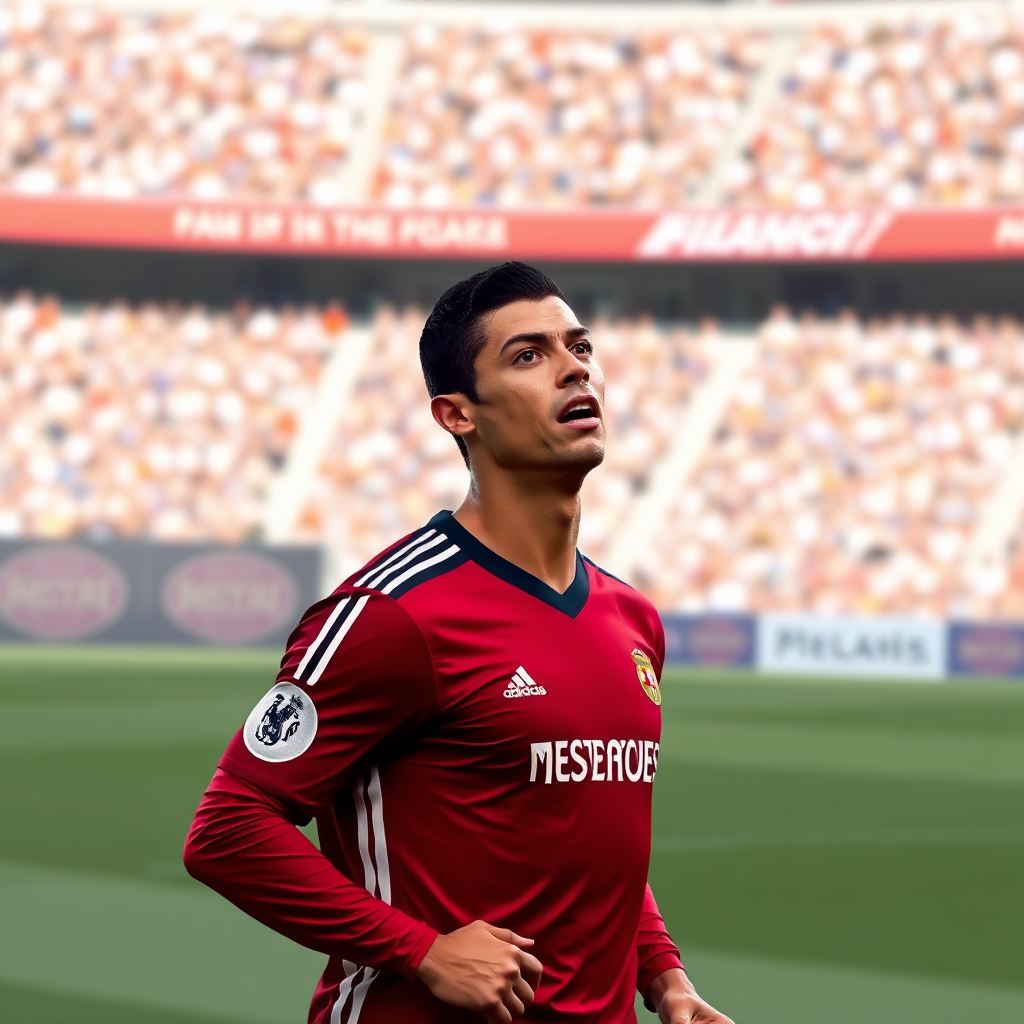 Hình minh hoạ: iwin
What to Watch in the First Ten Minutes of the Second Half
The first ten minutes after the restart are the loudest broadcast of the coach’s changes. Players are fresh, instructions are recent, and the patterns are easier to spot because they have not yet degraded through fatigue or tactical response.
Shape Without the Ball
Start by ignoring the ball. Look at the team’s first line of defensive structure. Are they pressing high or waiting deep? Is the front line horizontal or staggered? These details reveal intent. A flat midfield four with no one stepping forward often signals a cautious approach. A diamond midfield with a forward dropping off indicates an aggressive press.
One helpful trick is to count the players in each vertical lane when the opponent is building from the back. If the defending team has one striker marking a centre-back and the other striker hovering near the midfield line, the team is setting a trap. If both strikers push onto the centre-backs, the message is simple: play long, because we will not let you build.
Attacking Tempo and Directness
Notice how quickly a team moves the ball forward. Some teams suddenly play direct, hitting long passes toward the striker’s chest. Others slow down and work the ball through short combinations. A faster tempo usually means the coach wants to exploit tired legs. A slower tempo suggests confidence and control.
Watch the full-backs as well. If both full-backs push high at the same time, the team is committing to attack. If one stays home while the other overlaps, the coach has created a safety valve. These small structural choices tell you more than any single pass.
Defensive Line Height
The height of the defensive line is one of the easiest signals to read. A high line compresses the pitch and strangles an opponent’s build-up. A low line invites pressure and relies on counterattacks. When a team that defended deep in the first half suddenly moves its back four up by fifteen yards, the coach has decided the risk of conceding an over-the-top ball is worth the reward of winning possession higher up the pitch.
In the first ten minutes of the second half, give yourself three quick mental notes: the attacking shape, the pressing trigger, and the defensive line. You will already be ahead of most casual viewers.

How to Evaluate Substitutions with a Simple Framework
Substitutions are the most visible tactical changes, but beginners often misinterpret them by focusing only on the player who left the pitch. The relevant question is what the team loses and what the team gains in structural terms. A coach who takes off a winger for a second striker is not just changing personnel; the team is changing its formation and priorities.
Use a three-step check whenever a substitution happens:
- Who came on? Is the new player more offensive, more defensive, or similar to the player they replaced?
- Where did they slot in? Check where the substitute stands in the first thirty seconds after they enter the game. Is the player wide, central, or deep?
- What behavior changed? After two or three minutes, watch the team as a whole. Did the full-backs push higher? Did the defensive midfielder drop between the centre-backs? Did the wide player start hugging the touchline or cut inside?
A Quick Reference for Substitution Types
| Substitution type | What you will see | Most likely intention |
|---|---|---|
| Like-for-like | Player enters the same position; formation largely unchanged. | Maintain intensity, inject fresh legs, avoid structural risk. |
| Attacking restructure | A defender or midfielder leaves; a forward or creative player enters. | Change the game in the final twenty minutes, accept higher defensive risk. |
| Defensive consolidation | A forward comes off; an extra defender or holding midfielder appears. | Protect a lead, reduce space, slow the game down. |
| Tactical switch | Formation visibly changes, such as 4-3-3 becoming 3-5-2. | Exploit a specific weakness or address a recurring threat from the opponent. |
Beginners should not overthink the label. Instead, ask what the coach wants the next fifteen minutes to look like. The substitution is the instruction; the movement is the proof.

How to Detect Tactical Changes When No One Is Substituted
Some of the most significant second-half changes happen without a single substitution. Coaches adjust instructions verbally, and you have to spot the adjustment through positional shifts. This is where many beginners give up, but it is easier than it sounds once you know which players to watch.
Watch the Full-Backs, the Number Ten, and the Holding Midfielder
These three roles tell the most complete story because they are the players whose positioning defines a team’s shape. Track the full-backs first. If they swap sides with each other, the coach is changing the matchup against an opponent’s winger. If they both push up, the team is widening the pitch. If one stays deep, the coach is protecting a specific side.
The number ten or the most creative midfielder is the second player to track. A player who begins the half playing between the opponent’s midfield and defense is being asked to receive between the lines. If they suddenly drop deep to pick up the ball, the team is struggling to progress through the middle and is looking for a different passing lane.
The holding midfielder is the last player to check. Watch whether they stay in front of the centre-backs or step forward to join the attack. A holding midfielder who stops shielding the defense and starts arriving in the box is the strongest signal that the coach has abandoned caution.
Marking Changes
Man-for-man marking adjustments are hard to spot on a single camera angle, but they become visible when you focus on one matchup for three or four minutes. If a specific winger suddenly has two defenders near him every time he receives the ball, the coach has added support. If the opponent’s number nine stops dropping deep because he is being followed by a centre-back who steps out of the defensive line, that is a deliberate tactical choice.
Do not try to track every player. Choose one team, choose one phase of play, and follow the ball when the team has it. After four minutes, switch your focus to the defensive shape when the team loses the ball. This alternating rhythm prevents your eyes from glazing over.

The 15-Minute Pattern Method
Here is a practical method you can use in your next match. It is built around fifteen-minute blocks, which are long enough to reveal a pattern and short enough to keep your attention sharp.
- Pick a reference point. At the start of the second half, note the team’s formation as best you can. Write it down if you must, using numbers such as 4-4-2 or 4-2-3-1.
- Wait fifteen minutes. At minute sixty, ask yourself five questions: Are the full-backs higher or lower than at the start of the half? Is the striker dropping deeper? Is the team pressing or retreating? Which side is being exploited? Who looks like the player the coach is trying to get involved?
- Compare to the first fifteen minutes. The change may be gradual. Players may drift slightly rather than jumping into a new shape. The shift from a compact block to a high press often happens over a few minutes.
- Repeat at minute seventy-five. By then, the game has entered an emotional phase. Teams fall back or push forward based on the score. Your job is not to predict every outcome but to name the current pattern.
This method works because it forces you to observe rather than react. You stop saying “they were better” and start saying “they moved their defensive line higher and their winger stopped tracking back.” The latter is a concrete observation, and that is the foundation of tactical literacy.
Common Mistakes Beginners Make When Evaluating Tactical Changes
Several errors will derail your analysis if you are not careful. Knowing them in advance saves you from learning the hard way.
- Only watching the ball: The ball is where the action is, but tactical changes happen off the ball. When you watch only the possession, you miss the full-back who moved fifteen yards forward three seconds before the pass reached him.
- Attributing everything to motivation: “They wanted it more” is not an analysis. Tactical changes are often the cause of improved performance. A team that presses higher does not look more motivated; it looks more structured.
- Ignoring fatigue as a variable: A player who stops tracking back in the seventieth minute may have an instruction to conserve energy, not a laziness problem. Consider fatigue before you criticise.
- Overreading a single moment: One long pass or one strong tackle does not make a tactical change. Look for repetition over several minutes.
- Forgetting that opponents react: The second-half tactical story is a dialogue. The home team changes shape, then the away team responds with a substitution, and the cycle repeats. Do not describe it as one static change.
These mistakes are normal. The reason they feel persistent is that tactical reading is a skill, not a memory test. You must practice seeing the pitch without the ball, and that takes time.
Putting It Into Practice: A Simple Half-Time Note System
If you want to build a habit, try writing three quick notes at halftime and checking them at the end of the match. The goal is not to produce an analysis report; it is to give your observation a clear target. Here is a short version you can adapt to a notebook or a phone memo.
What to Write at Halftime
- The current score and which team is more desperate for a goal.
- The losing team’s main weakness, such as the right side being exposed or the midfield getting overrun.
- The winning team’s approach, such as sitting deep or pressing high.
What to Write at Minute Sixty
- Did anyone come off? Did the formation change?
- Is the losing team pressing higher or playing more directly?
- Which player on the winning team has drifted out of the game?
What to Write at Minute Seventy-Five
- Is the game more open? Are there big spaces between the lines?
- Which team is making the last substitutions, and what positions are they filling?
- If you had to name the single tactical decision that changed the match, what would it be?
This system does not require you to know every formation or every coach’s philosophy. It only requires you to notice what is in front of you. Within a few matches, you will begin to anticipate changes before they happen.
How This Helps You Anticipate the Next Phase
Once you can name a tactical change, you start reasoning about its consequences. A team that has just moved to a back three may concede space on the wings. A team that is chasing the game with four forwards is vulnerable to a counterattack. These are not wild guesses; they are logical consequences of the shape the coach has chosen. When you watch the game with this mindset, you will find that goals often arrive after a tactical change made a team more aggressive but also more exposed.
The limitations matter just as much as the wins in this kind of analysis. You will sometimes be wrong because football contains unpredictable individual moments. A miscontrol, a rebounded shot, or a red card can upset the most logical tactical assessment. Use these moments to recalibrate, not to give up.
Frequently Asked Questions
How long does it take for a tactical change to show its effect?
Most beginner analysis should wait about ten minutes after a change before drawing a conclusion. Some changes are visible immediately, such as a formation shift from a back four to a back three. Other changes, like a shift in pressing triggers, may take several minutes to appear because the opponent has to be in possession in a certain area first.
Should I watch both teams at the same time?
No. As a beginner, focus on one team for thirty minutes at a time. When you track both teams simultaneously, you spread your attention too thin. Watch the team whose tactical change is most urgent, then switch to the opponent to see how they respond.
Can I judge a tactical change only by the result?
No. A team can make the perfect tactical adjustment and still lose because of a defensive error or an individual moment. Evaluate the change on the quality of the positioning and movement, not only on the scoreline.
Do coaches plan second-half changes in advance?
Sometimes yes, but often the halftime analysis is specific to the score and the opponent’s behaviour. A coach may have planned to substitute a winger at minute sixty, but if the team concedes early in the half, the plan changes. You should view tactics as a reactive process, not a fixed script.
Final Recommendations by Reader Group
Now that you have the framework, apply it according to your habits. Not everyone watches football with the same goal, and your focus should match your interest.
If you are a casual viewer who simply wants to enjoy matches with more depth, start with the first ten minutes of the second half and the substitution table. That is enough to impress your friends with clear observations about why the game shifted. Do not worry about recording notes or tracking every player. A single observation per half is already a step forward.
If you are an aspiring analyst or a new coach, commit to the 15-minute pattern method for a full month. Watch one match per week and take notes at the recommended checkpoints. Review the notes after the match and compare them with the final scoreline. You will quickly notice where your reading of the game was correct and where you missed signals. The structure of your analysis will become more important than the speed of your thinking.
If you are a fantasy football player, your priority should be evaluating how tactical changes affect individual players. A team that switches from a 4-3-3 to a 3-5-2 changes the value of its wing-backs and central strikers. Watch for those positional moves in the second half because they often explain why a player slows down or becomes more involved. When a coach moves a midfielder higher up the pitch, the player’s attacking contribution tends to increase, but the team’s defensive stability may decline.
If you watch football for betting purposes, treat tactics as one input of many. The second half often brings corrective changes that alter the expectation of a match, but no coach can guarantee an outcome. Do not chase wagers based on a single substitution. Instead, use tactical analysis to understand the likelihood of a more open game, a higher number of shots, or a late push from a losing side. Set a bankroll limit you are comfortable with, stay aware of the risks, and remember that responsible participation is far more valuable than any short-term prediction. If you want to compare live line-up information and track second-half changes alongside a community of observers, you can explore the iwin platform for local match discussions. Some viewers also prefer to keep a live stats companion on their phone, which is why you might choose to tải iwin to follow the match at the same time as you apply these steps. Check the available features before relying on any tool, and always use it as an aid rather than a shortcut.
The second half is where football matches are won and lost in ways that rarely appear in the highlight reel. Start the next match with one simple intention: find the change before a goal explains it to you. Once you develop that habit, you will never watch the second half the same way again.